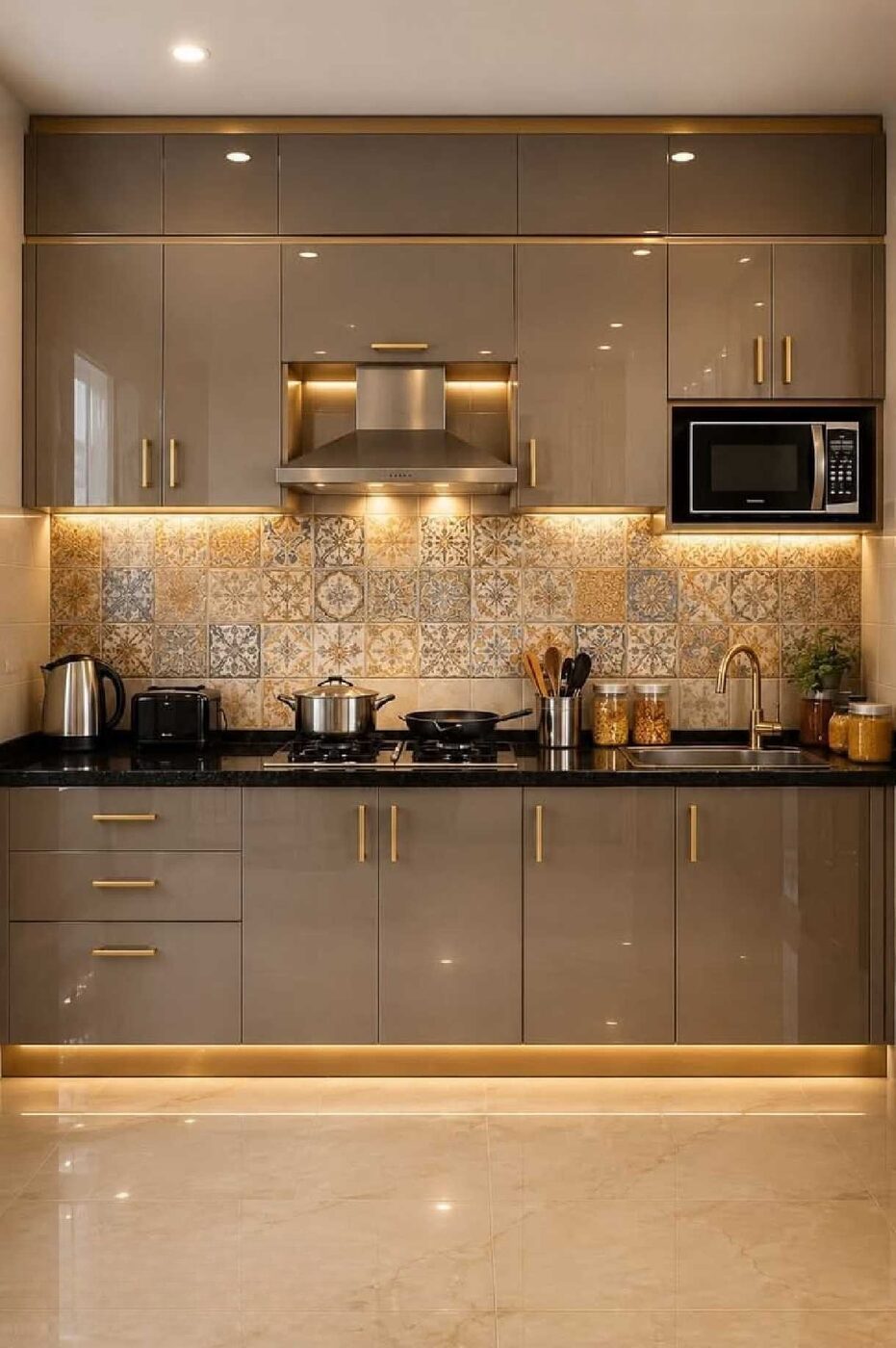
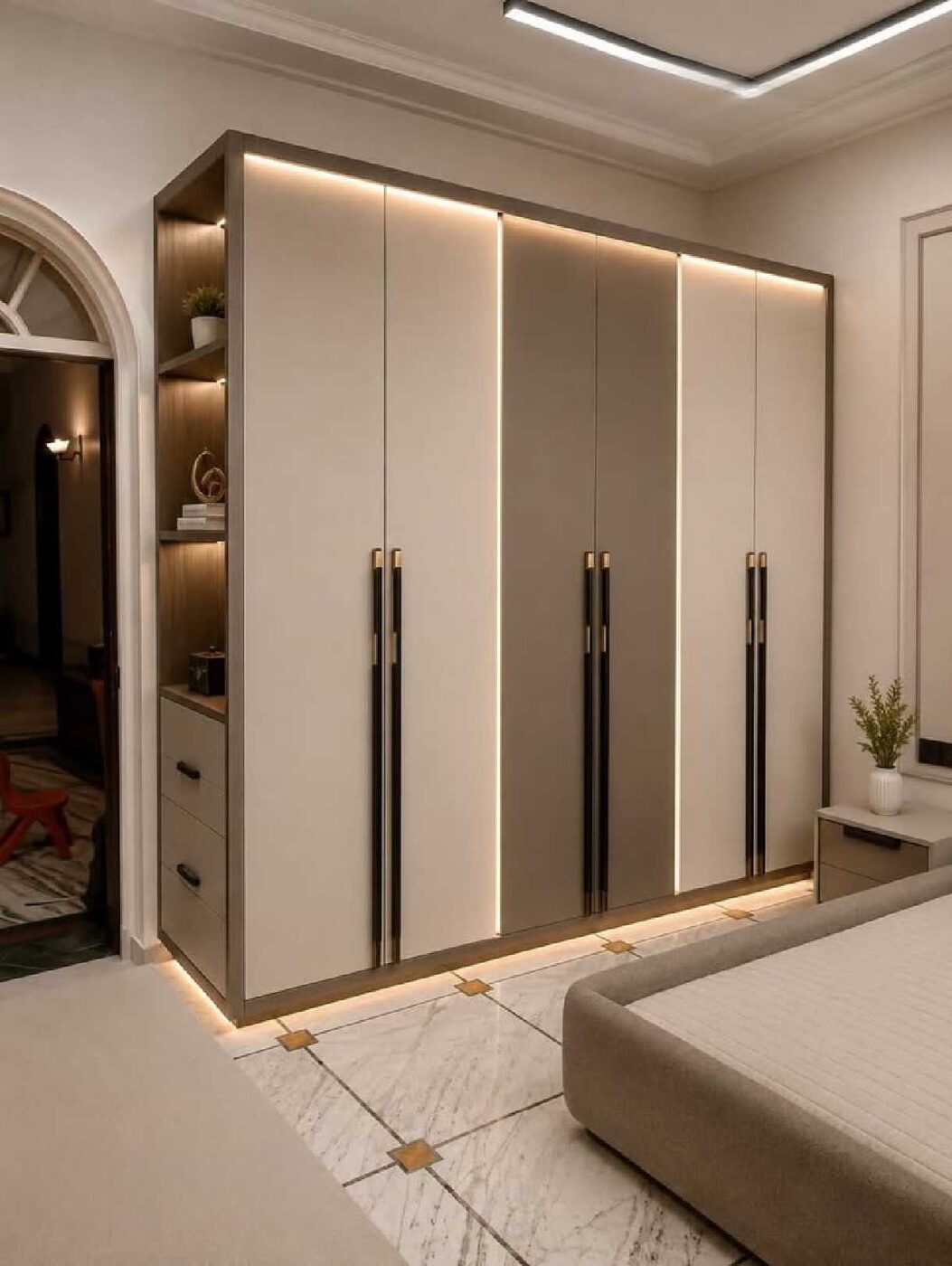
Almost every interior client asks this question at some point: should the kitchen, wardrobes and storage units be modular, or carpentry-built on site? Both can deliver a beautiful, functional result, and the right answer genuinely depends on your budget, timeline and how much customisation your space needs - not on one being universally "better" than the other. Here's a straightforward comparison to help you decide, based on what we see play out on real projects.
What's the Actual Difference?
Modular furniture is manufactured in a factory as standardised panels and components - cabinet boxes, shutters, hardware - which are then assembled and fitted on site to your layout. Carpentry-built furniture, by contrast, is custom-built on site by carpenters from raw boards and sheets, cut and assembled to your exact specifications piece by piece. The difference isn't really about the final look; both can use identical materials (laminate, PU, veneer) and similar hardware. The difference is in how it's made, and that's what drives most of the practical trade-offs below.
Timeline: Modular Wins, Usually by a Wide Margin
Because modular components are pre-manufactured off-site, installation at your home is primarily assembly and fitting - which is significantly faster than carpentry work, where every piece is measured, cut, edge-banded and assembled on site from scratch. For a standard modular kitchen or wardrobe, this difference can mean the gap between a project wrapping up in roughly a week versus several weeks for an equivalent carpentry-built piece. If your timeline is tight - for example, you're moving in on a fixed date - modular is almost always the safer choice.
Finish Consistency: Modular Has the Edge
Factory-cut panels and machine-applied edge-banding produce a more consistent finish than hand-cut, site-assembled carpentry, especially on detail work like shutter alignment, drawer channels and edge finishing. This doesn't mean carpentry work is low quality - a skilled carpenter can produce excellent results - but site conditions (dust, humidity, lighting) make it harder to achieve the same uniformity across every piece compared to controlled factory production.
Flexibility and Customisation: Carpentry Has the Edge
Where carpentry genuinely outperforms modular is in handling non-standard spaces and highly specific requirements - an oddly shaped alcove, a non-standard ceiling height, or a design detail that doesn't match any standard modular module size. Carpentry can be built to fit the exact dimensions and quirks of your space, piece by piece, whereas modular systems work within a library of standard module widths and depths that sometimes need slight compromises to fit an unusual layout. If your space has unusual proportions or you want a genuinely one-of-a-kind design detail, carpentry gives you more room to get it exactly right.
Cost: It Depends More Than People Expect
The common assumption is that carpentry is always cheaper and modular is always a premium option, but this isn't reliably true anymore - it depends heavily on the materials and hardware specified either way. A high-end modular kitchen with premium shutters and soft-close hardware can cost more than a modestly specified carpentry kitchen using basic plywood and standard hinges, and vice versa for a premium carpentry build using imported veneers. The more useful way to compare cost is to specify the same material and hardware grade for both approaches and then compare labour and timeline costs - that's the apples-to-apples comparison that actually tells you something.
Maintenance and Longevity
Modular hardware (hinges, channels, soft-close mechanisms) tends to be standardised and easier to source replacement parts for later, since it typically comes from established hardware brands with wide distribution. Carpentry hardware can vary project to project depending on what the carpenter sourced at the time, which occasionally makes future replacement slightly harder to match exactly - worth asking about upfront if long-term serviceability matters to you.
Our Recommendation, in Practice
For modular kitchens and wardrobes in fairly standard room layouts, modular furniture is usually the better default - faster, more consistent, and increasingly cost-competitive. For unusually shaped spaces, highly specific design details, or furniture that needs to work around existing structural elements you can't move, carpentry is often worth the extra time. Many of our clients actually combine both - a modular kitchen for speed and consistency, paired with a carpentry-built feature unit or TV wall for a custom look in the living room. Our full home interior design team will walk through this trade-off room by room during your consultation rather than applying one approach to the whole home by default, and the same logic applies whether you're furnishing a modular kitchen or a bedroom wardrobe.
Questions Worth Asking Before You Decide
Whichever direction you lean, ask for a clear breakdown of material grade, hardware brand, and installation timeline in writing for both options before comparing quotes - a lower number on paper sometimes means a lower material or hardware spec, not a genuinely cheaper version of the same thing. You can also find more on how we scope interior work generally in our interior design FAQ section.